Southbank Melbourne Parking Guide
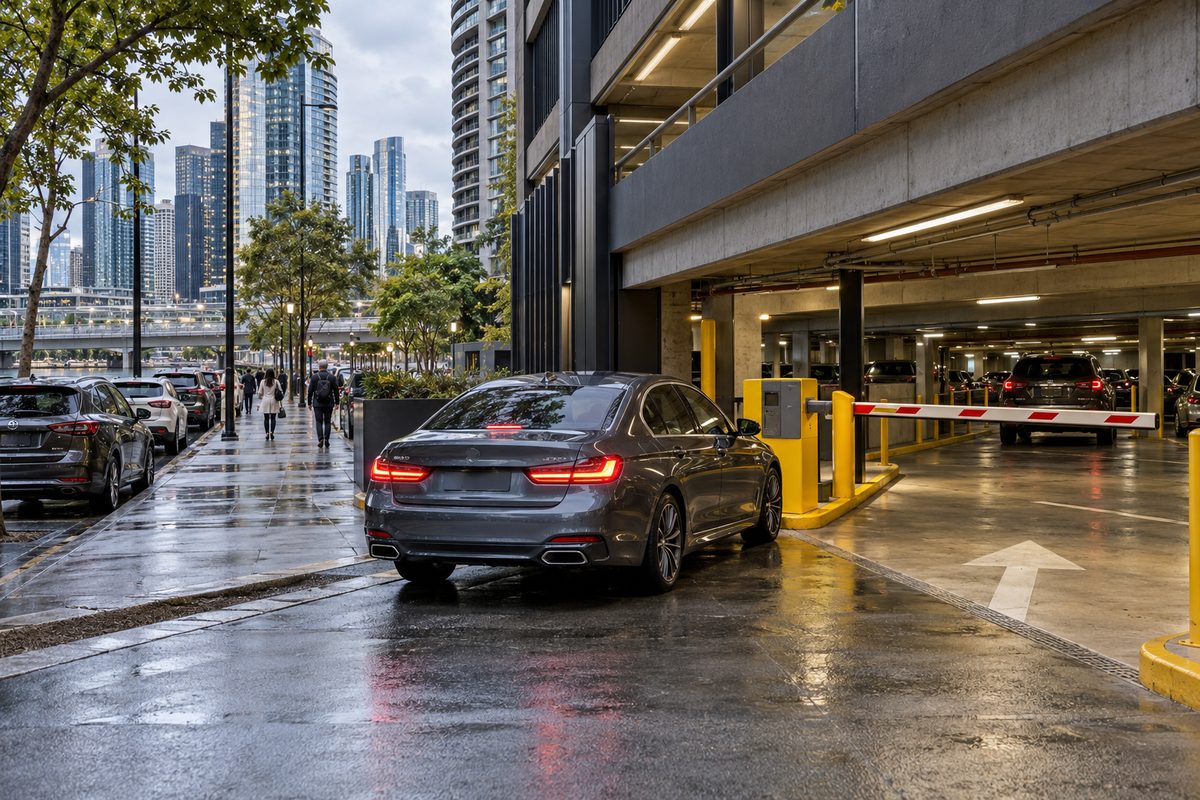
Park in the commercial car park attached to the venue you are visiting, book it online before you leave home, and only look for an on-street bay if you are stopping for under two hours. That one rule covers most trips to Southbank, Victoria. The suburb sits on the south side of the Yarra River, directly opposite the central city, and it has far more off-street spaces than kerbside ones. Crown Melbourne, the Melbourne Convention and Exhibition Centre and Arts Centre Melbourne each run their own large car parks, and the office towers along City Road and Riverside Quay add thousands more. Street parking is short-stay, metered and heavily patrolled by the City of Melbourne. Treat it as a quick-stop option, never as a plan for a show or a dinner.
This guide from Southbank by the River walks through where each car park sits, how the street rules work, how to pay less, and when driving is the wrong call entirely.
Which car park is closest to where you are going?
Southbank is roughly two kilometres long but only a few hundred metres deep in most places. The right car park depends on which end you are heading to. Pick wrong and you add a fifteen-minute walk in the rain or a loop around one-way streets at closing time.
Arts Centre Melbourne and Melbourne Recital Centre
The Arts Centre Melbourne car park is the obvious choice for Hamer Hall, the State Theatre, the Playhouse and the Fairfax Studio. Entry is from Sturt Street, behind the theatres building, and lifts bring you up inside the precinct. It fills on nights when two or more venues have performances, so pre-book for anything on a Friday or Saturday evening.
Melbourne Recital Centre, on the corner of Southbank Boulevard and Sturt Street, has no public car park of its own. The Arts Centre car park is the closest, about a four-minute walk. The Australian Ballet Centre and the surrounding Sturt Street blocks have small private car parks that are not open to concertgoers, so do not count on them.
Both venues sit at the St Kilda Road end of Southbank, which matters for the tram advice later in this guide.
Crown Melbourne
Crown Melbourne runs multi-level car parks under and beside the complex, with entries from Whiteman Street. It is the largest single parking lot in the suburb (a parking lot being what most Melburnians simply call a car park) and it rarely closes to new entries, even on busy nights. The trade-off is the exit. After a big event or late on a Saturday, cars queue inside the structure for a long time because every level empties onto the same few ramps. If you are at Crown for a restaurant booking rather than the casino, the Freshwater Place or Southgate car parks give you a shorter walk back to Clarendon Street or Southbank Promenade and a faster exit.
Melbourne Convention and Exhibition Centre
The Melbourne Convention and Exhibition Centre car park is entered from Normanby Road at the western end of Southbank. It is purpose-built for exhibitions, so it is wide, well signed and quick to leave. During a major public show it can fill before 10am. Siddeley Street, across the river near Docklands, has overflow commercial parking, and the South Wharf retail precinct next door has its own car park with retail validation on some days. If your event is on the convention side rather than the exhibition halls, the South Wharf car park is often the shorter walk.
Southgate and the riverside
Southgate's car park, entered from Southgate Avenue, serves the riverside restaurants and the footbridge across to Flinders Street. Eureka Tower and the Riverside Quay office towers have public parking with evening and weekend flat rates. These are the best options if you are coming for a riverside walk, a meal along the promenade or the Southbank Sunday Market, because they sit between the arts precinct and Crown rather than at either end.
Can you still park on the street in Southbank?
Yes, but only for short stays and only if you read the sign properly. The City of Melbourne manages on-street parking across most of the suburb. Bays are metered, usually with one-hour or two-hour limits, and in-ground sensors record how long you have been there. Payment is through the council's PayStay app or the meter. Overstaying a sensor bay is one of the most common fines in the municipality, and the sensor does not care that the meter still shows credit.
Three things catch visitors out. First, many bays on City Road, Kings Way and Power Street turn into clearways during morning and evening peaks, and a car left in a clearway is towed, not just fined. Second, Sunday rules differ from weekday rules on a street-by-street basis, so a bay that was free last Sunday may be metered the next because the signs changed. Third, Southbank Boulevard lost most of its kerbside parking when the City of Melbourne converted traffic lanes into parkland. The boulevard is now a pleasant walk but a poor place to hunt for a space.
The streets with the most realistic chance of a bay are the small residential ones south of City Road, such as Dodds Street, Moore Street and the blocks around Kavanagh Street. Expect a walk of eight to twelve minutes to the river from there. If you are visiting on a weekday, assume these will be taken by 8:30am.
How do you pay less for a full day or evening?
Commercial car parks in Southbank price by behaviour, not just by hour. Understanding the pattern saves real money.
- Early bird rates apply on weekdays when you enter before a set morning cut-off, usually around 9:30am, and leave after a set afternoon time, usually around 3pm. They are the cheapest way to park for a full workday and are often a third of the casual rate.
- Evening and weekend flat rates kick in after about 5pm or 6pm on weekdays and run all day Saturday and Sunday at many towers. These suit dinner, theatre and casino trips.
- Online pre-booking through the operator's website or app is almost always cheaper than driving in and paying at the machine, and it guarantees a space on nights when the sign at the gate says full.
- Venue validation is worth asking about. Some Southgate and South Wharf restaurants and retailers validate tickets for reduced rates, and Crown members receive parking benefits.
Compare the operators rather than assuming the venue car park is the best deal. Wilson, Secure, Care Park and Ace all run sites within a few hundred metres of each other in Southbank, and the gap between the dearest and cheapest evening rate on the same block can be significant.
When is driving into Southbank a bad idea?
Traffic congestion around Southbank is predictable, and on certain days no parking strategy fixes it. Knowing the pattern lets you decide before you get in the car.
Event nights at Docklands Stadium push tens of thousands of cars onto Wurundjeri Way and the Kings Way approach at the same time Southbank's own venues are letting out. The two crowds meet at the Spencer Street and Clarendon Street junctions. On these nights, a trip from the Crown car park to the West Gate Freeway on-ramp can take longer than the drive home from there.
The Formula 1 Grand Prix at Albert Park in March closes roads to the south and diverts traffic onto St Kilda Road and City Road for the better part of a week. Moomba on the Labour Day weekend, New Year's Eve and the Australian Open fortnight in January all close or restrict streets on the river side of Southbank. White Night and other City of Melbourne festival events do the same on specific evenings.
Weekday peaks are the ordinary version of the same problem. Kings Way, City Road and Power Street carry freeway traffic through the suburb, and from about 4:30pm to 6:30pm the whole grid moves slowly. If your booking is at 6pm on a Thursday, leaving an extra twenty minutes is not pessimism. It is the normal allowance.
Is park and ride a smarter option?
For most evening visits, yes. Southbank has no formal council-run park and ride, but the public transport network makes an informal one easy to build.
The train route is simplest. Park at an outer suburban station with a commuter car park, catch a train to Flinders Street railway station, and walk across Princes Bridge. From the station concourse you are at Hamer Hall in five minutes, Southgate in six and Crown in about fifteen along the river. Flinders Street is also where you return to after the show, which avoids the car park exit queue entirely. Station car parks are free at most locations and are usually emptying out in the late afternoon just as event-goers arrive.
The tram route suits anyone coming from the south. Trams run along St Kilda Road every few minutes and stop directly outside Arts Centre Melbourne. If you are staying in or near St Kilda, Victoria, you can park at your accommodation or on a St Kilda side street, board a route 16 or 3 tram on St Kilda Road or Fitzroy Street, and be at the Recital Centre stop in roughly twenty minutes. Route 96 does the same job from the Acland Street end of St Kilda, finishing at the Casino and MCEC stops on Clarendon Street. The whole trip sits inside the free tram zone only once you reach the city, so touch on with myki.
The best argument for park and ride is not the saving on parking. It is the exit. Walking out of a theatre and onto a tram that leaves in three minutes beats sitting on level four of a car park waiting for the ramp to clear.
What do most Southbank parking guides get wrong?
They treat Southbank as one place. It is not. The arts end near St Kilda Road and the convention end near Normanby Road are almost two kilometres apart, and a car park that is perfect for one is a long walk from the other. Always start with the venue address, then pick the car park, never the other way round.
They also assume street parking is a real option. In practice the suburb is dense residential and office towers with narrow streets, and the kerbside supply was never large. The City of Melbourne has reduced it further through the Southbank Boulevard project and expanded bike lanes on Kavanagh Street and Southbank Boulevard. Guides written a few years ago list streets that no longer have bays.
Finally, many guides ignore the exit. Entering a Southbank car park is rarely the hard part. Leaving one at 11pm alongside everyone else from the same show is where the evening sours. The car parks with the most exits per space, such as the Riverside Quay towers and Southgate, are worth a slightly longer walk in for that reason alone.
What should you do before your next trip?
Check three things the night before. Look up which venue you are going to and pick the car park within a five-minute walk of its front door, using the breakdown above. Open that operator's website and book a space at the evening or early bird rate, which locks in the price and the spot. Then check the City of Melbourne and Victoria Police event pages for road closures on your date, because a Docklands Stadium fixture, a Grand Prix week or a river festival changes the answer completely.
If any of those checks turn up an event, leave the car at a suburban station and take the train to Flinders Street railway station instead. You will spend less, walk through one of the best approaches to the Yarra River in the city, and be home before the car park ramp has cleared. For more on getting around the precinct once you arrive, see the rest of the local guides at Southbank by the River.