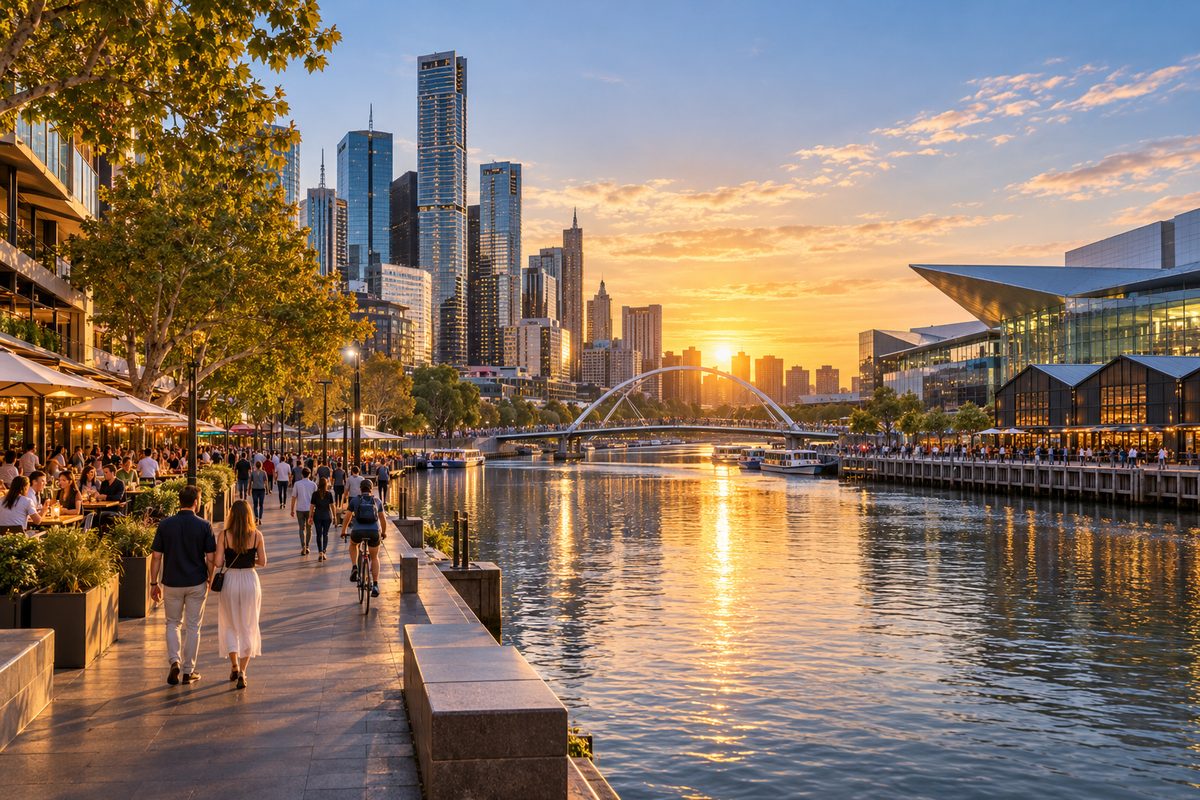
Southbank Versus South Wharf Visitor Guide
Southbank is the better base for a first visit to Melbourne because the arts precinct and the main river promenade are there, while South Wharf suits conference delegates and outlet shoppers who want a quieter stretch of river next door to Docklands. The two sit side by side on the same bank of the Yarra River and share a continuous footpath, so you will almost certainly visit both. The real decision is where you sleep, where you eat at night and which end you treat as home. This guide from Southbank by the River sets out the differences so that decision takes two minutes instead of two hours of tab-switching.
Where does Southbank end and South Wharf begin?
Southbank, Victoria runs along the south side of the Yarra River directly opposite the Melbourne central business district. Its eastern edge is St Kilda Road at Princes Bridge. From there it stretches west past Southgate, Eureka Tower and Crown Melbourne to roughly Clarendon Street. South Wharf starts on the other side of that line. It is a separate suburb on the map, carved out of Southbank's western end, and it covers the Melbourne Convention and Exhibition Centre, the Direct Factory Outlet attached to it, the hotels around them and the row of heritage cargo sheds along the water. It finishes at the Seafarers Bridge, where Docklands, Victoria begins on the opposite bank.
Both suburbs share the 3006 postcode, which is why hotel sites blur them. A listing that says "Southbank" can be a ten minute walk from the Arts Centre or right beside the exhibition halls. Check the street name. Anything on Convention Centre Place, Dukes Walk or South Wharf Promenade is in South Wharf. Anything on Southbank Promenade, Southgate Avenue, City Road or St Kilda Road is in Southbank proper.
One more trap. "South Bank" written as two words is the riverside parkland in Brisbane. Melbourne's suburb is a single word. Search results and even some airline maps mix them, so if a page mentions a beach lagoon or the Wheel of Brisbane, you are reading about the wrong city.
Which precinct has the sights most visitors come for?
Southbank, by a wide margin. The eastern end holds Arts Centre Melbourne under its spire, Hamer Hall on the riverbank and the National Gallery of Victoria's international building on St Kilda Road. Walk north over Princes Bridge and you are at Federation Square and Flinders Street railway station within five minutes, which makes this corner the natural meeting point for the whole city. Keep walking west along Southbank Promenade and you reach Southgate, Melbourne Skydeck at Eureka Tower and then the long riverfront of Crown Melbourne with its restaurants and casino.
South Wharf has fewer headline attractions and is more of a purpose-built precinct. The draws are the Melbourne Convention and Exhibition Centre, the Direct Factory Outlet, the Polly Woodside tall ship moored beside the convention centre and the cargo sheds that now hold bars and restaurants. The Polly Woodside opens on limited days, so check the National Trust site before you walk down for it.
If you have one day in Melbourne and want to see things, base yourself at the Southbank end. If you are in town for an event at the convention centre, South Wharf saves you a daily walk and you can still reach the galleries in under half an hour on foot.
Which one is easier to reach from the city and the airport?
They are served by different stations, and that drives the answer. Southbank's gateway is Flinders Street railway station. Every metropolitan train line stops there, and from the station you cross to the south bank on one of two footbridges. Evan Walker Bridge drops you straight onto Southgate. Sandridge Bridge, the converted rail bridge with the large steel traveller sculptures, lands you near Queensbridge Square and the eastern edge of Crown. Trams up St Kilda Road stop outside the Arts Centre and the National Gallery of Victoria.
South Wharf's gateway is Southern Cross Station. Walk south down Spencer Street, cross the Spencer Street Bridge and you are at the convention centre in about ten minutes. SkyBus from Melbourne Airport ends at Southern Cross, so South Wharf hotels give you the shorter transfer with luggage. Trams on Clarendon Street stop at the Casino and convention centre stop, which serves both Crown and the exhibition halls. From the western end of South Wharf, the Seafarers Bridge takes you over the river into Docklands and on to Marvel Stadium.
The Free Tram Zone covers the city grid and Docklands. Most Southbank and South Wharf stops sit just outside it, so touch on with your myki or plan to walk from Flinders Street or Spencer Street, both of which are inside the zone.
Where should you stay, Southbank or South Wharf?
Southbank has more rooms and more variety. Crown runs three hotels on one block, there are river-view towers around Southgate and a deep stock of serviced apartments on City Road and Kavanagh Street. You pay for the location with noise and crowds on Friday and Saturday nights, especially near the casino. Rooms facing the river at the eastern end are the quietest, and they put you closest to the theatres and the station.
South Wharf has a smaller cluster of hotels built around the convention centre, with the Pan Pacific and the Novotel the best known. The precinct is calm on weekends when no event is running, and the promenade restaurants are a short walk from every room. The catch is pricing. When a large trade show or medical congress fills the Melbourne Convention and Exhibition Centre, South Wharf rates rise sharply and rooms sell out weeks ahead, while Southbank hotels a few hundred metres away stay available. Check the convention centre's event calendar before you book either side.
Families often do better in South Wharf. The promenade is flatter and less crowded, the outlet mall has food courts and toilets, and the walk to the river is short. Couples who want a show and a late dinner should pick Southbank.
Which has the better eating and nightlife?
They offer different evenings, and the honest answer is that Southbank is bigger and South Wharf is more relaxed. Southbank Promenade from Princes Bridge to Crown is the busiest dining strip in the city. Southgate's upper levels and the Crown Riverwalk hold restaurants with a direct view of the skyline across the water, and the whole strip stays busy until late. Bookings are essential at the weekend, and prices reflect the view. Crown's riverfront fire towers run after dark; check Crown's website for the current schedule.
South Wharf Promenade feels like a different city. The restaurants sit inside the heritage sheds and spill onto the wharf, with long outdoor tables, breweries and pubs rather than white tablecloths. The crowd is after-work and post-conference, the view faces west over the river toward Docklands, and the sunset is better than anything you get from Southgate. It quietens earlier, so plan your late drink back in Southbank or over the bridge.
Southbank by the River keeps separate dining guides for each occasion and location, so a romantic dinner on Southbank Promenade and a casual group lunch at the South Wharf sheds are covered as different lists. Start at the Southbank by the River home page and pick the guide that matches your night rather than reading both.
Which precinct suits shoppers?
South Wharf, and it is not close. The Direct Factory Outlet at South Wharf is one of the largest outlet centres in the country, connected directly to the convention centre and open seven days. It covers fashion, sport, homewares and luggage at discounted prices, and it has parking under the building. If a bargain hunt is on your list, stay in South Wharf or set aside half a day for it.
Southbank's shopping is thin. Southgate has a handful of small stores, and Crown has luxury boutiques along its upper arcade. For general shopping you cross the river to the Melbourne central business district, where Bourke Street Mall and the laneway arcades are a ten minute walk from Princes Bridge. Nobody chooses a Southbank hotel for the shops, and nobody should.
What do most guides get wrong about the two?
Four errors keep appearing in visitor articles and booking descriptions.
- They present the precincts as rivals. They are one riverfront. The walk from Princes Bridge to the Seafarers Bridge takes about half an hour at an easy pace, with no road crossings on the water side. You can eat in one and sleep in the other without thinking about transport.
- They place South Wharf in Docklands. Docklands, Victoria is on the opposite bank of the Yarra River and belongs to a different waterway system around Victoria Harbour. South Wharf is linked to it by the Seafarers Bridge but is a separate suburb with a separate feel.
- They put Crown in South Wharf. Crown Melbourne is in Southbank. Clarendon Street is the boundary, and the convention centre is the first thing you meet after crossing it.
- They call the arts precinct the CBD. Arts Centre Melbourne and the National Gallery of Victoria are in Southbank on St Kilda Road. Federation Square, across Princes Bridge, is the CBD side. The distinction matters when you are judging walking times from a hotel.
How should you split a day between them?
Start at the eastern end and move west, so the sun is behind you in the afternoon and you finish where the sunset is. A workable plan looks like this.
- Arrive at Flinders Street railway station and cross Princes Bridge. Spend the morning at the National Gallery of Victoria or take a tour at Arts Centre Melbourne.
- Walk back to the river and have lunch at Southgate or along Southbank Promenade with the skyline in front of you.
- Continue west past Crown Melbourne. Detour onto Sandridge Bridge for the best photo of the promenade behind you.
- Cross Clarendon Street into South Wharf. Visit the Polly Woodside if it is open, or spend an hour in the Direct Factory Outlet.
- Take an outdoor table at the South Wharf sheds for an early dinner facing west.
- Return by walking the same promenade, or cross the Seafarers Bridge into Docklands and catch a tram back through the city on the free zone.
If you are attending an event at the Melbourne Convention and Exhibition Centre, reverse the order. Do South Wharf during the day and walk east for dinner and a show when the sessions end.
How do you decide in one minute?
Pick Southbank if your trip is built around galleries, theatre, the main promenade or easy access to Flinders Street railway station and Federation Square. Pick South Wharf if you are attending a convention, arriving by SkyBus, planning an outlet shopping day or travelling with children who need space and calm. Price it both ways, because event weeks flip the usual rate pattern.
Your takeaway: choose your base by what you will do after 6pm, because the daytime attractions are walkable from either end, and the evening is the only part of the day where the two precincts feel like different places.
Before you book, do these four things.
- Check the street address of the hotel against the boundary described above, not the suburb label.
- Look up the convention centre's event calendar for your dates.
- Book your Southbank Promenade dinner now if it falls on a Friday or Saturday.
- Read the occasion-based dining guides at Southbank by the River so you arrive with one shortlist instead of forty open tabs.